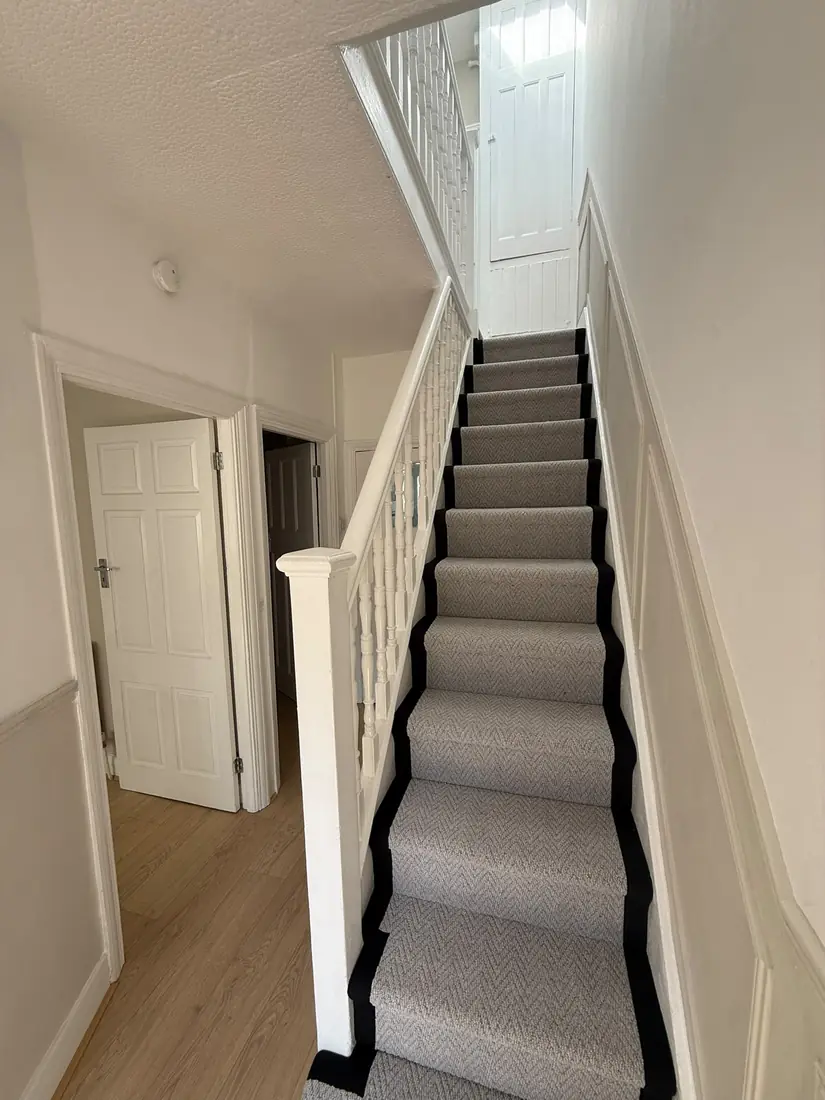



It’s one of the questions we hear most in the showroom: “Should I go for LVT or laminate?” Both give you the look of real wood (or stone) for less than the real thing, and both are hard-wearing. But they’re made very differently, and that makes a real difference once they’re down in your home.
What’s the difference?
Laminate is built on a core of high-density fibreboard (compressed wood fibre). A high-resolution photo of wood or stone sits on top, sealed under a very hard, clear wear layer. The boards usually click together and “float” on an underlay rather than being stuck down.
LVT (luxury vinyl tile) is made from layers of vinyl, with a printed design and a clear protective wear layer on top. It comes as planks or tiles. Some is glued down to a smooth, prepared subfloor (often called “dryback”), and some has a rigid core that clicks together like laminate.
So the big difference is what’s inside: wood fibre in laminate, vinyl in LVT. Almost everything else follows from that.
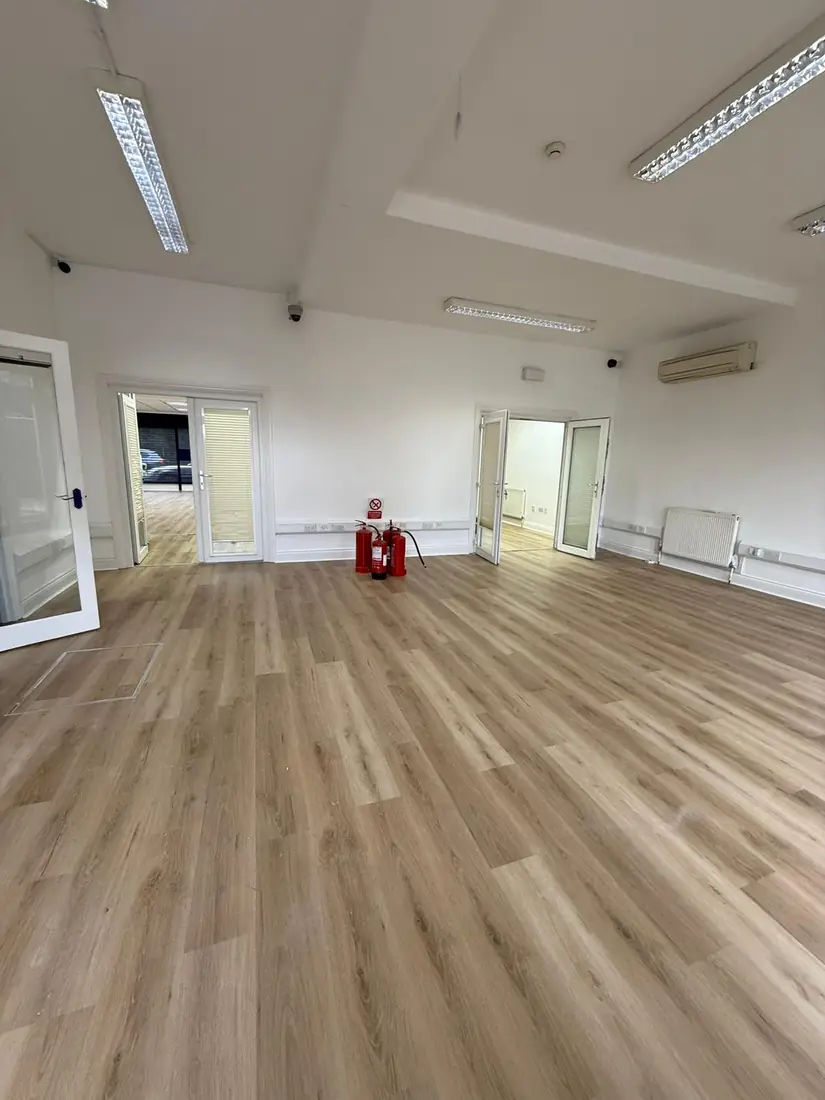
LVT vs laminate side by side
| LVT | Laminate | |
|---|---|---|
| Water | Vinyl isn’t harmed by water. Good for kitchens and bathrooms. | The fibreboard core can swell if water gets into the joints. Best in dry rooms. |
| Noise | Quieter and softer underfoot, especially when glued down. | Can sound hollow or “clicky” without a good underlay. |
| Warmth & comfort | Feels warmer and slightly softer. | Harder and cooler underfoot. |
| Scratches | Resists everyday wear well. Grit dragged in on shoes can scuff it, so use a doormat. | Very hard surface, very resistant to scratches. |
| Repairs | A damaged glued-down plank can often be lifted and replaced on its own. | Replacing one board usually means unclicking the row. |
| Subfloor | Glue-down LVT needs a very smooth, level subfloor, so preparation is part of the job. | More forgiving. Floats over underlay on a reasonably flat floor. |
| Price | Usually costs more, especially premium brands and glue-down fitting. | Usually the lower-cost option for a large area. |
Which is best for each room?
Kitchens
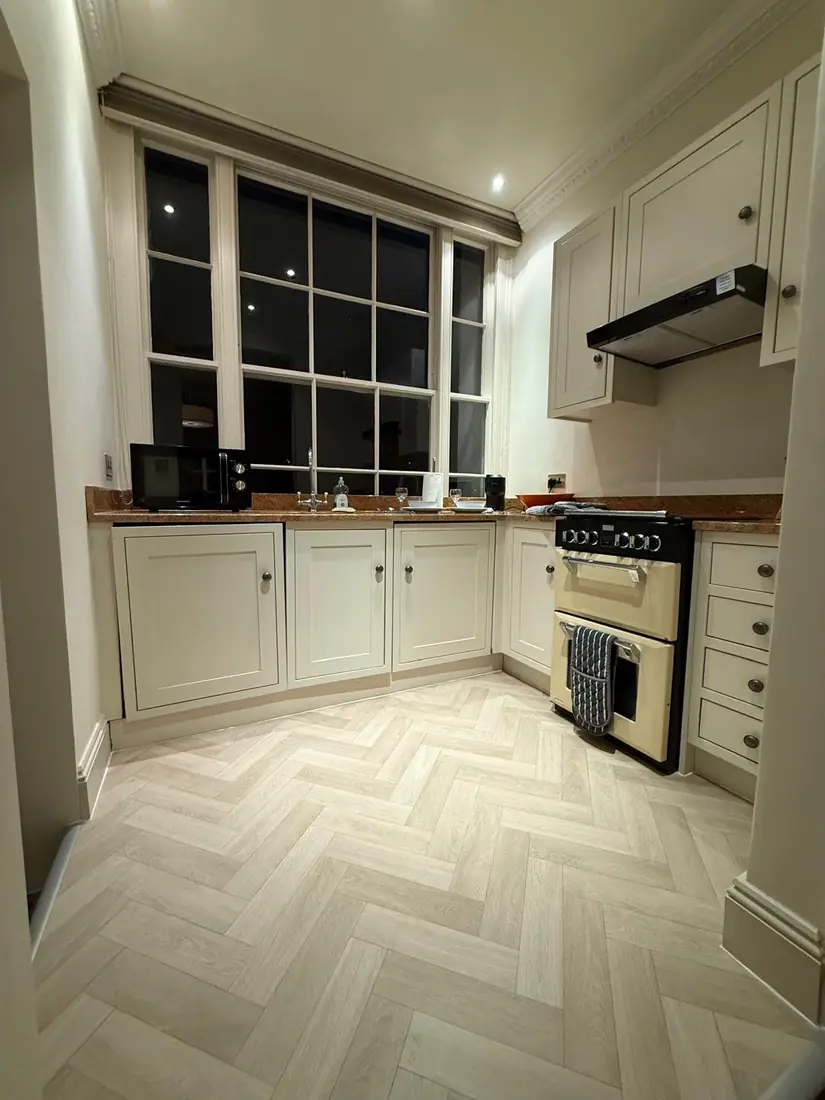
LVT, in most cases. Kitchens see spills, dropped glasses and mopping every day. LVT copes with all of that, and it’s kinder to your feet (and to anything you drop). Herringbone and chevron LVT is a very popular look in London kitchens at the moment.
Bathrooms, cloakrooms and utility rooms
LVT. We don’t recommend standard laminate in bathrooms. For a wet room or a bathroom with a lot of splashing, sheet vinyl such as Rio Megatex is also worth a look, because it comes off the roll in one piece with very few joins.
Living rooms, bedrooms and dining rooms
Either works, and laminate is often the better value. In dry rooms, laminate’s hard-wearing surface and lower cost make a lot of sense. If you want a warmer, quieter floor, or you’re in a flat, LVT is worth the extra.
Hallways
Both are good. Hallways take the most wear and the most grit from outside. Laminate’s hard surface handles the traffic well. LVT is quieter and doesn’t mind wet shoes and umbrellas. A good doormat helps either floor last longer.
Flats
Check your lease first. Many London leasehold flats have rules about hard floors and sound insulation, and some need the freeholder’s consent. LVT is naturally quieter, and both floors can be fitted over an acoustic underlay or subfloor. Tell us about your building when we measure and we’ll make sure what we quote is suitable.
Which lasts longer?
Both last for many years when they’re good quality and well fitted. The two things that matter most are:
- The wear layer. This is the clear top layer that takes the wear. On LVT it’s measured in millimetres. On laminate the durability is shown by an AC rating (AC3 is fine for most homes, AC4 and above for heavy wear). Ask to see these numbers for any floor you’re quoted.
- The fitting. A floor laid on an uneven subfloor, without the right underlay or without expansion gaps, won’t last, however good the product is. This is where a proper home measure and survey earn their keep.
What fitting involves
Laminate is usually laid as a floating floor over an underlay. The existing floor needs to be reasonably flat, and door bottoms may need trimming to clear the new floor height.
Glue-down LVT needs a very smooth, level subfloor, because any bumps will show through over time. That often means a latex levelling compound or thin plywood before the planks go down. It’s extra work, but it’s what gives LVT its solid, quiet feel. Click LVT with a rigid core is more forgiving, a bit like laminate.
When we come to measure, we check the subfloor, the doors and any underfloor heating, and all of that goes into your written quote, so there are no surprises on the day.
How much do LVT and laminate cost?
As a rule, laminate costs less per square metre than LVT, and glue-down LVT costs more to fit because of the subfloor preparation. But the final price depends on the product you choose, the size and shape of the room, the condition of the subfloor, and extras like underlay, trims and taking up the old floor.
That’s why we give a free, no-obligation written quote after measuring, rather than a rough per-metre figure that changes later.
The ranges we fit
You can see and handle all of these in our W2 showroom, or we’ll bring samples to your home:
- LVT: Amtico, the British premium name in LVT with a huge range of wood and stone designs, and Therdex.
- Sheet vinyl: Rio Megatex, for bathrooms and kitchens where you want as few joins as possible.
- Laminate: Xylo, Lifestyle Chelsea and Chelsea Herringbone.
Want real wood instead? Have a look at our engineered wood flooring.
Our verdict
If the room gets wet, or you’re in a flat and worried about noise, go for LVT. If it’s a dry room and you want the most floor for your money, laminate is a great choice. If you’re still not sure, book a free home measure. We’ll bring samples of both, look at your subfloor and give you an honest recommendation. Or call us on 02034902346. We’re open 7 days a week.
Questions we get asked
Is LVT better than laminate?
Neither is better everywhere. LVT is the stronger choice anywhere water is involved (kitchens, bathrooms, utility rooms) and in flats where noise matters. Laminate is often the better value for dry rooms such as living rooms, bedrooms and hallways, and its surface is very hard to scratch.
Can laminate go in a kitchen or bathroom?
We don’t recommend standard laminate in bathrooms. Its core is made from compressed wood fibre, which can swell if water gets into the joints. Some water-resistant laminates cope well with kitchen spills if they are wiped up quickly, but for bathrooms and busy family kitchens LVT is the safer choice.
Which is quieter, LVT or laminate?
LVT. It is a softer material, so footsteps sound duller, especially when it is glued down. Laminate can sound hollow or ‘clicky’ underfoot. In a flat, both usually need a suitable acoustic underlay or subfloor, so check your lease before you choose any hard floor.
Can LVT and laminate go over underfloor heating?
Many LVT and laminate floors are made to work with underfloor heating, but there are temperature limits and fitting rules that vary by product. Tell us about your heating when we measure and we will only recommend floors approved for it.
Do you fit LVT and laminate across London?
Yes. We supply and fit both across London from our showroom on Bourne Terrace, W2. We offer a free home measure and bring samples to you, and you can also come in and see the floors in person, 7 days a week from 9am to 5pm.